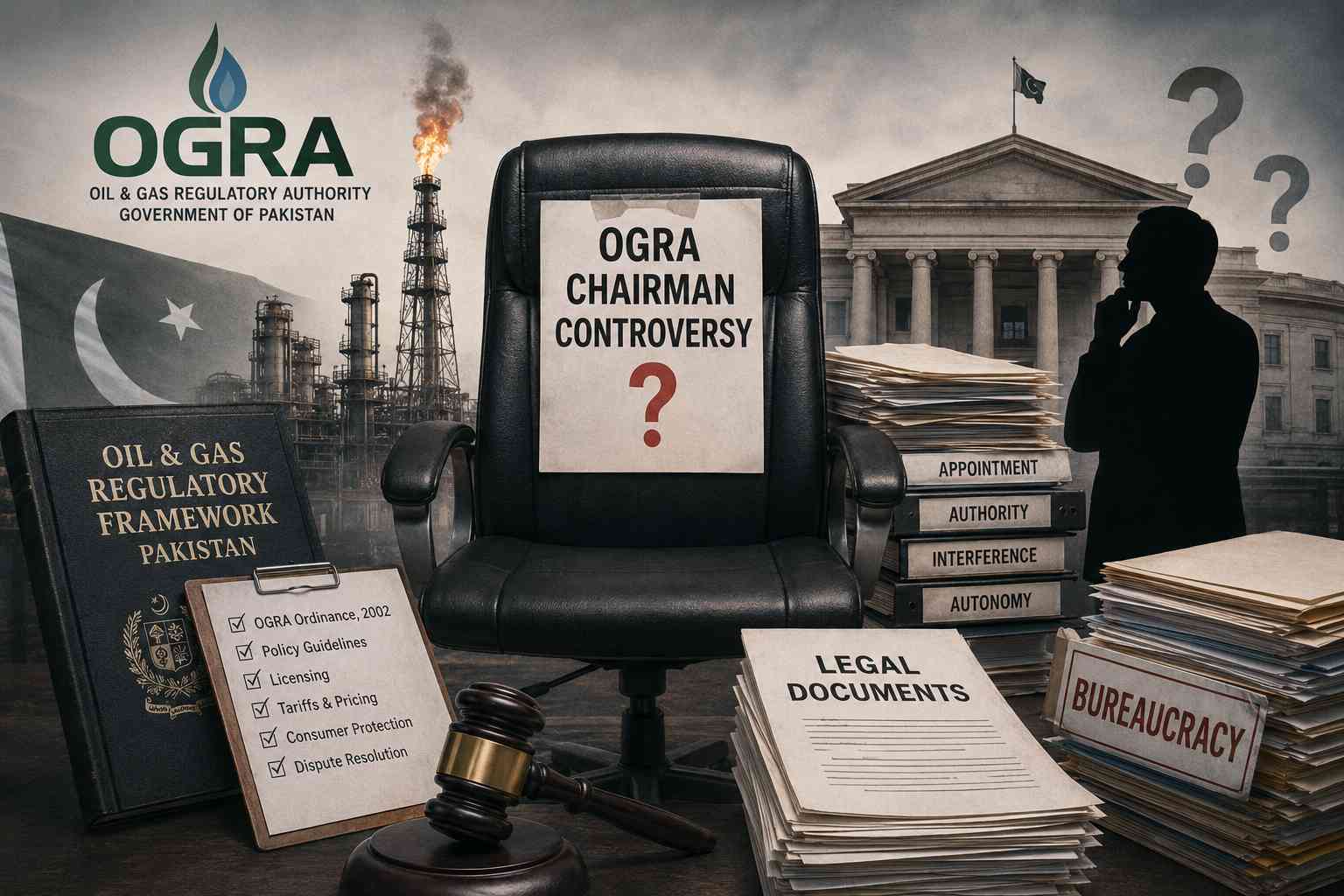
Pakistan’s governance system has once again entered public debate after journalist Ahmad Noorani questioned the appointment of Establishment Secretary Nabeel Ahmad Awan as acting chairman of the Oil and Gas Regulatory Authority (OGRA).
The Nabeel Awan OGRA controversy is not only about a bureaucratic appointment. Instead, it has triggered a larger discussion about regulatory independence, executive influence, economic governance, and institutional autonomy in Pakistan.
According to Noorani, the issue highlights a deeper structural problem where institutions that should function independently gradually come under bureaucratic or executive control.
Why The Nabeel Awan OGRA Appointment Matters
OGRA is one of Pakistan’s most important regulatory authorities. The institution supervises the oil and gas sector, regulates licensing, monitors standards, and oversees pricing structures.
In modern economies, regulatory bodies usually operate independently from direct political or bureaucratic influence. As a result, they help maintain fair competition, consumer protection, transparency, and investor confidence.
Noorani argued that regulators should ideally remain under the leadership of professionals and sector experts rather than administrative officers directly linked to executive authority.
Role Of OGRA In Pakistan’s Economy
OGRA plays a major role in Pakistan’s energy sector because it:
Issues licenses
Regulates pricing frameworks
Oversees market standards
Monitors compliance
Protects consumers
Supervises competition within the sector
According to critics, weakening the independence of such institutions can damage investor trust and market stability.
Ahmad Noorani Raises Legal Questions
Ahmad Noorani publicly questioned whether the Nabeel Awan OGRA appointment complies with the legal framework governing independent regulators.
He argued that the chairman’s office should not function like a routine administrative posting under the federal bureaucracy.
According to Noorani, the broader issue concerns institutional autonomy rather than any personal criticism of Nabeel Ahmad Awan.
Concerns Raised About The Appointment
Noorani referred to different sections of the OGRA legal framework while discussing the controversy.
He argued that:
Independent regulators must remain autonomous
Bureaucratic interference weakens regulatory institutions
Additional charge arrangements may conflict with the spirit of the law
Executive dominance can undermine institutional independence
Furthermore, Noorani claimed that regulators exist specifically to prevent direct executive control over technical sectors.
Response Attributed To Nabeel Ahmad Awan
During his discussion, Noorani also read out what he described as a response from Nabeel Ahmad Awan.
According to the reported response, Awan stated that he is a civil servant under the Civil Servants Act 1973 and serves wherever the government directs him to serve.
The response further suggested that questions regarding legality should be addressed to the concerned ministry or government division rather than the officer carrying out official instructions.
Main Points In The Response
The response attributed to Awan reportedly stated that:
He is following government instructions
He serves wherever the government assigns him
The legal interpretation falls under the relevant ministry
He cannot personally be held responsible for policy decisions
However, Noorani maintained that his criticism focused on the government’s decision rather than the officer personally.
Debate Over Regulatory Independence In Pakistan
A major part of the discussion focused on the philosophy behind independent regulatory authorities.
Noorani argued that institutions like OGRA are intentionally designed to remain separate from executive interference.
According to him, such regulators influence:
National energy markets
Consumer pricing
Competition policies
Investment confidence
Licensing systems
Consequently, critics fear that excessive executive influence may reduce the effectiveness of regulatory bodies.
Why Independent Regulators Matter
Independent regulators are considered important because they:
Protect market competition
Prevent monopolistic behavior
Encourage investment
Ensure transparency
Build public confidence
Moreover, experts often argue that regulators should function professionally rather than politically.
Economic Concerns Linked To Institutional Control
The discussion later expanded into broader economic concerns.
Noorani claimed that Pakistan’s economic problems are closely linked to monopolies, unequal business conditions, and institutional interference.
He argued that independent businesses frequently face delays, approvals, bureaucratic hurdles, and regulatory complications.
Meanwhile, powerful institutions allegedly receive administrative facilitation and quicker approvals.
Impact On Business Environment
According to Noorani, this imbalance negatively affects:
Free market competition
Private investment
Economic growth
Innovation
Business confidence
He also argued that genuine market economies depend on open competition where businesses compete through price, quality, and efficiency.
Civil Supremacy And Governance Debate
The Nabeel Awan OGRA debate also revived broader discussions about governance and civil supremacy in Pakistan.
Noorani argued that Pakistan continues struggling with overlapping institutional power structures.
He claimed that politicians often receive blame for governance failures while deeper structural issues escape scrutiny.
Issues Highlighted During The Discussion
The discussion highlighted concerns regarding:
Executive overreach
Centralized bureaucratic control
Weak institutional boundaries
Political dependency
Lack of accountability
According to Noorani, meaningful reform requires genuinely independent institutions.
Public Debate Continues Over Nabeel Awan OGRA Issue
The Nabeel Awan OGRA controversy has now become part of a larger national debate about governance and institutional autonomy.
Supporters of the government’s position argue that civil servants regularly handle additional responsibilities when administrative necessity requires it.
However, critics insist that regulators like OGRA differ from ordinary departments because they are specifically designed to function independently.
Therefore, the controversy continues raising questions about how Pakistan’s institutions should operate.
Conclusion
The Nabeel Awan OGRA controversy has exposed deeper concerns regarding regulatory independence, bureaucratic authority, and executive influence in Pakistan.
Ahmad Noorani argues that independent regulators must remain autonomous if they are to function fairly and professionally.
On the other hand, the response attributed to Nabeel Ahmad Awan stresses that civil servants simply follow government instructions and cannot personally determine policy-level legal questions.
As the debate continues, the controversy has become a wider conversation about governance, institutional balance, and the future of independent regulatory authorities in Pakistan.