Adil Raja – A Pakistani Journalist in UK
I am Adil Raja, a Pakistani journalist in UK, a commentator, and a former Pakistani army officer.
My reporting and commentary draw on both professional experience and independent investigation. Over time, my work has increasingly focused on exposing abuses of power and the erosion of democratic norms in Pakistan.
Before entering journalism, I served for nearly two decades in the Pakistan Army in operational and command roles. That experience gives me insight into the institutions I now report on, while my work today remains grounded in independent journalism.
About Adil Raja
I am Adil Raja, a UK-based journalist, commentator, and former Pakistani army officer.
My reporting and commentary draw on both professional experience and independent investigation. Over time, my work has increasingly focused on exposing abuses of power and the erosion of democratic norms in Pakistan.
Before entering journalism, I served for nearly two decades in the Pakistan Army in operational and command roles. That experience gives me insight into the institutions I now report on, while my work today remains grounded in independent journalism.
Journalism and Public Work
Through my platform; Soldiers Speak, social media accounts and other public channels, I report on:
- Civil-military dynamics in Pakistan
- Accountability and corruption
- Human rights violations
- The treatment of journalists and dissenting voices
My work has reached a wide international audience and has been referenced and discussed across media and policy circles.
Targeting and Transnational Repression
As a result of my journalism, I have been subjected to a sustained pattern of pressure and retaliation.
This has included:
- Criminal cases and court martial proceedings in Pakistan linked to my reporting
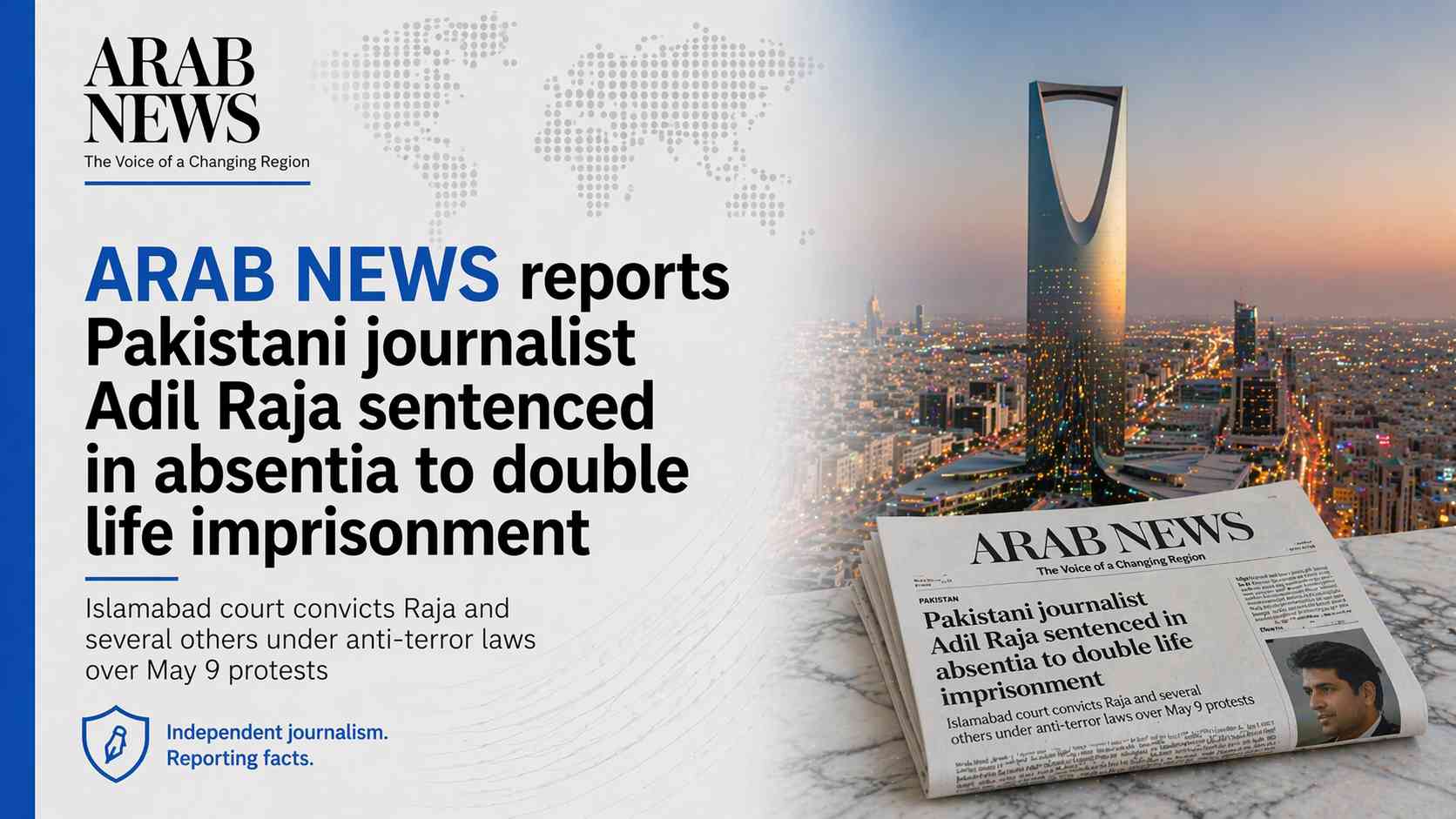
- Trials and sentencing in absentia
- Cancellation of my passport and national identity documents
- Seizure of assets
- Placement on a proscribed list
- Targeting of my family members, including the abduction of my mother
These actions reflect a broader pattern in which dissent is criminalised, journalists are treated as security threats rather than independent voices, and legal mechanisms are used to systematically target them.
In my case, proceedings have included trials in absentia — where individuals are convicted without being present, without access to evidence, and in some cases without even being provided written judgments. The justification often presented is that absence implies evasion. However, in reality, many journalists remain outside Pakistan due to credible risks, including unlawful detention, mistreatment, or worse.
Such practices undermine the basic principles of justice and due process, where the right to defend oneself is fundamental.
In 2023, I was also arrested in the United Kingdom under counter-terrorism powers following allegations originating from Pakistan. That investigation was later closed with no charge and no further action.
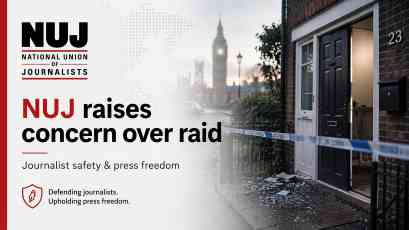
More recently, in December 2025, my home in Buckinghamshire was broken into and ransacked in what has been widely reported as a targeted incident, occurring alongside attacks on other Pakistani dissidents in the UK.
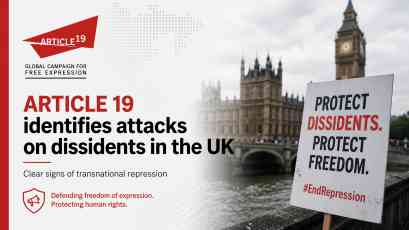
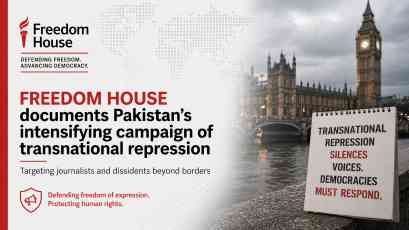
International organisations, including ARTICLE 19, the National Union of Journalists (NUJ), and Freedom House, have raised concerns that such incidents show clear signs of transnational repression—the extension of state pressure beyond national borders to silence critics abroad.
National Union of Journalists (NUJ)
ARTICLE 19
Freedom House
Legal Pressure & Source Protection
I have faced sustained legal pressure both in Pakistan and in the United Kingdom as a direct consequence of my journalism.
This includes a libel case brought by a former senior intelligence official, widely understood within the context of Strategic Lawsuits Against Public Participation (SLAPPs), where legal systems are used to pressure and silence journalists.
Throughout these proceedings, I made the conscious decision not to compromise the safety of my sources. In the context I report on, exposure can carry severe consequences, including the risk of serious harm.
I defended these cases through public support and crowdfunding, without access to the level of legal resources available to those bringing such actions.
In parallel, legal processes have increasingly taken on a punitive character rather than a protective one. Proceedings are initiated in ways that limit defence, restrict transparency, and create pressure rather than ensure justice.
Why I had to leave Pakistan
In April 2022, I was forced to leave Pakistan following increasing threats linked to my reporting and public positions.
Relocating to the United Kingdom was not a matter of choice, but necessity.
This decision meant leaving behind my family, including my mother, brothers, and sisters. Since then, they have faced sustained pressure.
My mother remains under constant surveillance, with restrictions on movement and communication. My family has been subjected to intimidation, isolation, and coercion—part of a broader pattern used to pressure journalists through those closest to them.
This reality underscores the cost of speaking out. It is not confined to the individual—it extends to those around them.
What is at stake is not only individual cases, but the integrity of legal systems. When courts operate without transparency, when judgments are withheld, and when defendants are excluded from proceedings, the line between law and power begins to erode.
Why This Work Matters Most
My work is rooted in a simple principle: accountability.
Journalism plays a critical role in exposing wrongdoing and giving voice to those who cannot speak freely. Where institutions fail, independent reporting becomes even more essential.
The pressures I have faced—legal, personal, and physical—reflect the risks that come with this work, but they also underline its importance.
International Media & Policy Coverage – My case forms part of wider reporting on Pakistani dissidents, extradition demands, and transnational repression affecting individuals in the United Kingdom
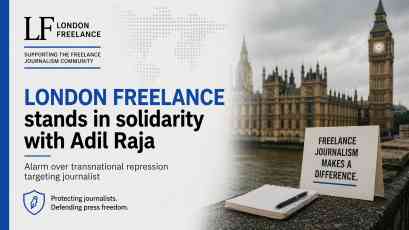
London Freelance (NUJ branch)
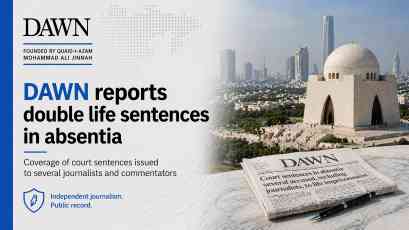
Dawn (Pakistan)
Arab News
Professional Background (Army, Business, and Public Roles)
Military Career
Before journalism, I served for 19 years in the Pakistan Army, including combat and command roles. I was a war-wounded veteran and served in operational environments, including as Wing Commander of the Khyber Rifles in the Frontier Scouts.
My experience included field security, intelligence-based operations, counter-terrorism environments, and regional geopolitical analysis, including coordination along the Afghanistan-Pakistan border.
Business & Entrepreneurship
Following my retirement in 2017, I was involved in business activities, including land acquisition and working with major real estate organisations such as DHA and Bahria Town.
Pakistan Ex-Servicemen Society (PESS)
I voluntarily joined the Pakistan Ex-Servicemen Society (PESS), where I established its media cell and served as a spokesperson.
In this role, I represented the concerns of the veterans’ community, contributed to public discourse, and appeared in media platforms as a political and security analyst.
A Son, A Brother, A Husband, A Father
Beyond my professional work, I carry responsibilities as a son, a brother, a husband, and a father.
The consequences of my journalism have directly affected my family. They have faced surveillance, pressure, and enforced separation.
This is not unique to me—it reflects a wider reality faced by many who speak out while their families remain within reach of state pressure.
A Broader Issue
My case is not unique.
It forms part of a wider and increasingly documented pattern in which states seek to:
- Silence critics beyond their borders
- Use legal systems to intimidate journalists
- Apply pressure through families and associates
- Undermine independent reporting
This raises important questions for democratic societies, including the United Kingdom, about how to protect freedom of expression and those who exercise it.
Moving Forward
I continue my work as a journalist with the support of my audience and the wider community that values independent reporting.
Despite the challenges, I remain committed to:
- Investigative journalism
- Speaking truthfully about power
- Protecting sources and journalistic integrity
Connect
You can follow my work and stay updated through SoldiersSpeaks.org and my public platforms. I am active across multiple platforms where I regularly share updates, reporting, and commentary.
For direct contact, media enquiries, or to share information, please use the Contact page.
For those who wish to support my work and engage more directly, Patreon remains the most effective way to stay connected and contribute to independent journalism. If you wish to be in direct contact become member of my Patrons family: https://www.patreon.com/SoldierSpeaks
Affiliated Institutions

IMCB F-7/3

PMA Kakul

Pakistan Army

18 Horse

Frontier Scouts- FC KPK

Peshawar University

Quaid-e-Azam University

PESS